Guna Yala
“Do we have to fly that swastika flag?” the wife asked.

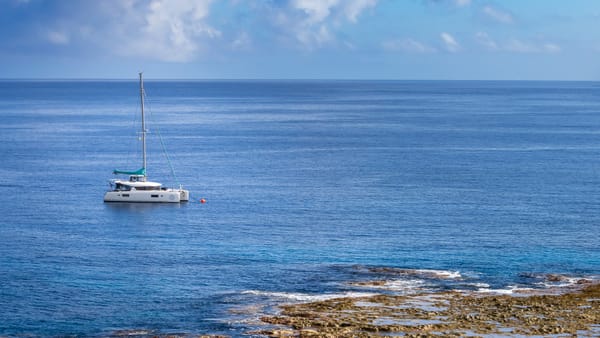
After four days at sea, we had left the familiar shores of the Eastern Caribbean and dropped the anchor in water so still and blue that you’d think we were at a lake in the Alps. But this was no Alps. It was the humid shores of Guna Yala on the northeast coast of Panama. We anchored outside El Porvenir, the town with the “airport and the immigration offices, and the place where we could buy local bread,” or so the guidebook said. And that description conjured an image, a schema, that fit the type of place where you find those things. But we were definitely not at that place.
There were signs, though. A large yellow Guna Yala flag with a big red swastika in the middle welcomed the potential visitors at a small dock. A deflated windsock on a pole marked the start of a small airstrip that doubled as a pen for two dozen donkeys. And two wooden buildings stood on the island, housing the community office and a small military outpost with two Panamanian guards.
“Do we have to fly that swastika flag?” the wife asked.
I knew about the Guna Yala flag. I knew the symbol preceded the Nazis by centuries. But it was still a swastika. And that meant that complying with the tradition of flying the host country flag from the starboard spreader of our mast would involve cruising around with a big swastika flying on our boat.
“Nope,” I said. “We don’t have that flag.”
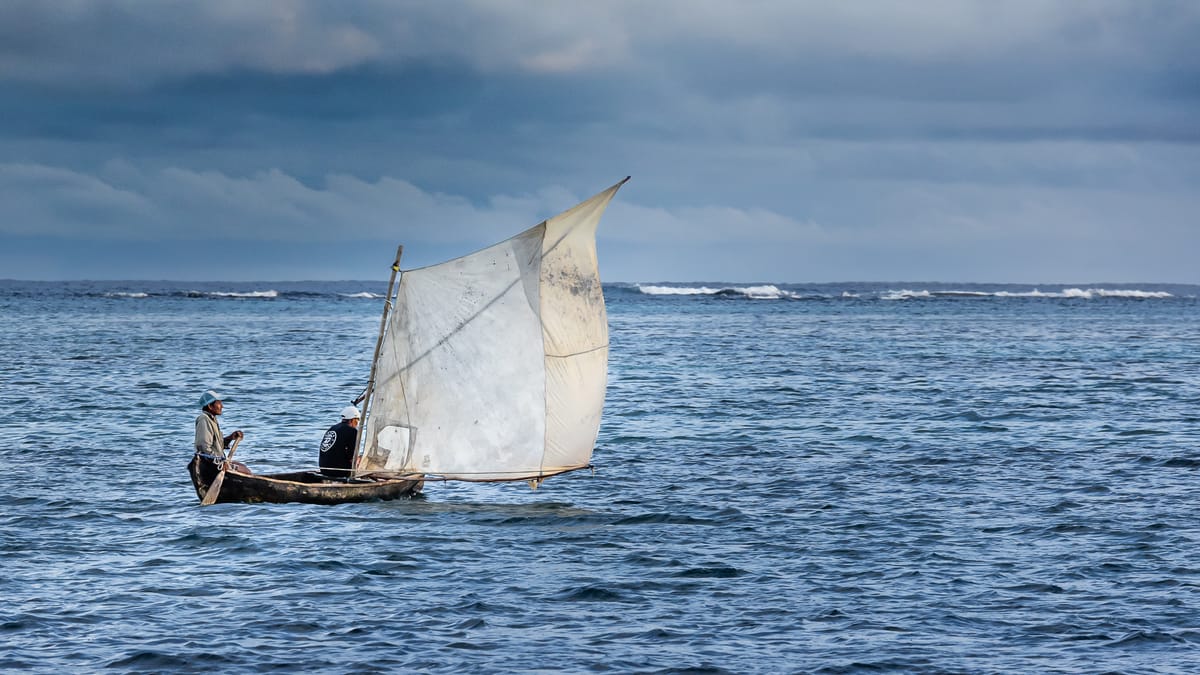
And then we saw a small canoe coming towards us. Being approached by locals when we reached a new anchorage was nothing new. It was usually a young guy on a small powerboat, wearing a Chicago Bulls hat or some other American cultural export, offering a tour of the island or fresh lobster for a couple of bucks. But this wasn’t it. This was not a powerboat. It was a silent paddle canoe made from a single tree trunk, commanded by three Guna women wearing red scarves on their heads and colorful traditional dresses embroidered with intricate geometric patterns. Their lower legs were wrapped in vibrant bead bracelets that, from a distance, resembled leg warmers, perfectly matching the patterns of their dresses.
And for the first time since we moved onto our boat and began exploring the islands of the Caribbean, we encountered a culture intact and proud, seemingly immune to the influence of a globalized Western world. The women smiled as they reached our boat. One pulled a set of Guna Yala flags from a bag.
“Guna flag. Fifteen dollars,” the oldest of the women said in heavily accented English. She pointed at the mast. “Guna flag, for your boat.”
They thanked us as they took our money and left paddling towards the dock. We raised the Guna Flag, swastika and all, on the starboard spreader of our boat.
- Thank you for reading. A fictionalized version of this true story is included in the Panama chapter of my first novel Hiva Oa.
- I’d love to hear your thoughts in the comments section below. If you enjoy this story, click “like” to help more readers discover it.
- This story is part of Harbour Stories, a collection of brief reflections and descriptions of the harbours we have visited while sailing around the world.
About Me
I’m Nestor Lopez-Duran, writing under the pen name N.L. Duran. I am a former psychology professor now sailing around the world while writing fiction and reflections on life at sea.